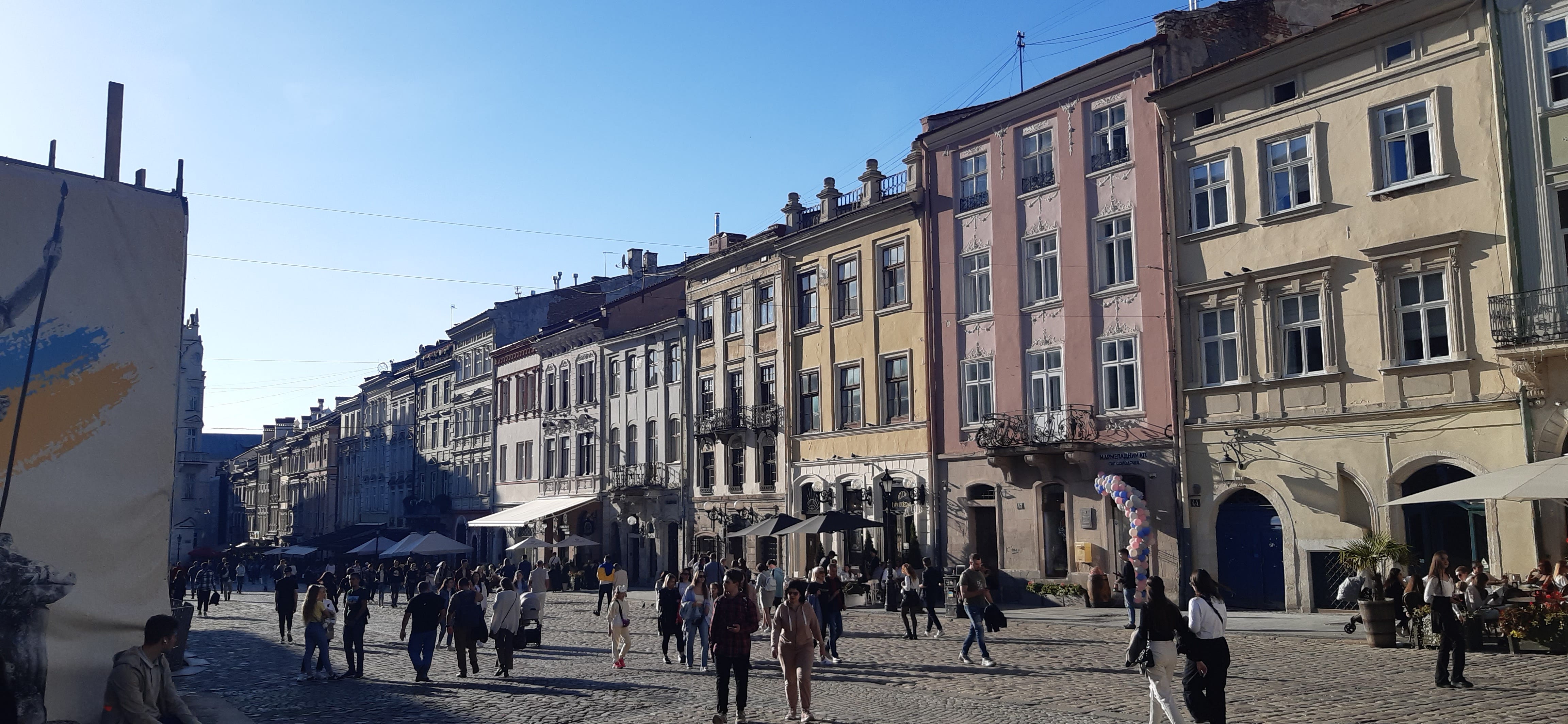
I arrived in Lviv on a Friday afternoon. If I had landed from outer space, I would have found it hard to believe that Ukraine is a country at war.
Lovely autumn weather. Restaurants serve champagne and oysters. Youngsters, families and the elderly stroll around the old town. Among them are some overdressed young women, supplemented by insecure young men circulating in overpriced cars. In other words, what you would find in any European city.
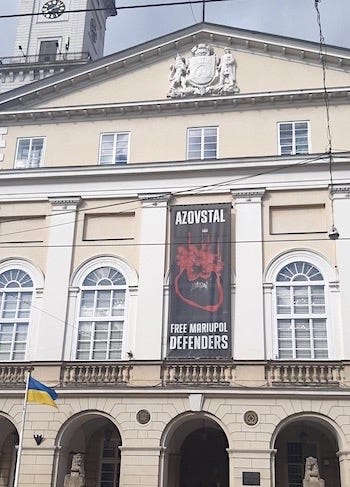
Apart from a few reminders. Closed museums and covered monuments. Stacks of sandbags. Pictures of the fallen and the Azovstal banner hanging on the south wall of City Hall.
A soldier walks by with a bouquet of red roses. Who are they for? A girlfriend he hasn’t seen in months?
Bars are full early in the afternoon. With a curfew from 11 p.m., the party starts early.
Thirst and hunger call, and Lviv surely knows how to satisfy those needs. But the service does not come with a smile. Praising their food, wine and bravery helps the matter.” Oh! Thank you!!!” The language barrier puts an end to any further conversation.
For three days, I tap my card around Lviv, and wonder if the local currency, hryvnia, I brought with me will come to any use.
Some of that cash goes to a pair of street musicians sounding like classically trained violinists.
Then I woke up on Monday morning. Was that the air raid alert? Followed by a massive explosion? It was. I go down to the reception. No panic in sight. Some guests head for the basement, while others have breakfast. No power, no Internet.
The hotel staff seem to be remnants from the Communist era who answer questions in as few syllables as possible, while using as few facial muscles as possible, despite good command of the English language. “We don’t know. Sit and wait.” They leave me none the wiser about what has happened.
Hard rational thinking sets in. “Leaving tomorrow. Do I have enough cash? How long will the battery on my phone last? Can I get a taxi? How long will it take me to walk to the bus station?”
After a few hours, the all-clear signal sounds. To the east, a plume of dense, dark smoke still rises in the distance. A power station?
No electricity means no trams, so I let my feet lead me to the IFAK project* (Individual First Aid Kit) I intend to visit.
The weekend’s relaxed atmosphere has been replaced by muted defiance. Outside a grocery store, people have formed a long queue in the twilight. Families wanting something for dinner that doesn’t need heating. Nobody says a word. A father holds the hand of his little daughter, who stands there like a pink-coated statue.
At night, cafes and restaurants are all open and mostly full. Still no electricity. Cold soups and salads are on the menu. The waiters handle orders with the help of candles. For the first time in decades, I receive a handwritten receipt. Where have they dug up those forms? The Ukrainians must have hidden them in the same communist closet as the deadpan receptionists at my hotel.
I can imagine what this would have been like at home. Where walking a mile through Stockholm due to heavy snow is “The worst thing I have ever experienced,” as a young woman interviewed on TV claimed.
Here in fat&lazy Western Europe, we have been lost in trivial quarrels and luxury problems for far too long.
The war in Ukraine has reminded us of what matters.
The people of Ukraine have shown us who we ought to be, and what we are capable of—if we are willing to take up the call.
I say goodnight to a dark Lviv in the company of the moon, wishing Putin and his cronies an eternal life in burning hell.
*I wrote about the project elsewhere. Sadly, it no longer exists.
This was from my first visit to Lviv in October 2022. I’ll come back to you with a letter from my latest visit in November.
Thanks for reading, and please subscribe!